
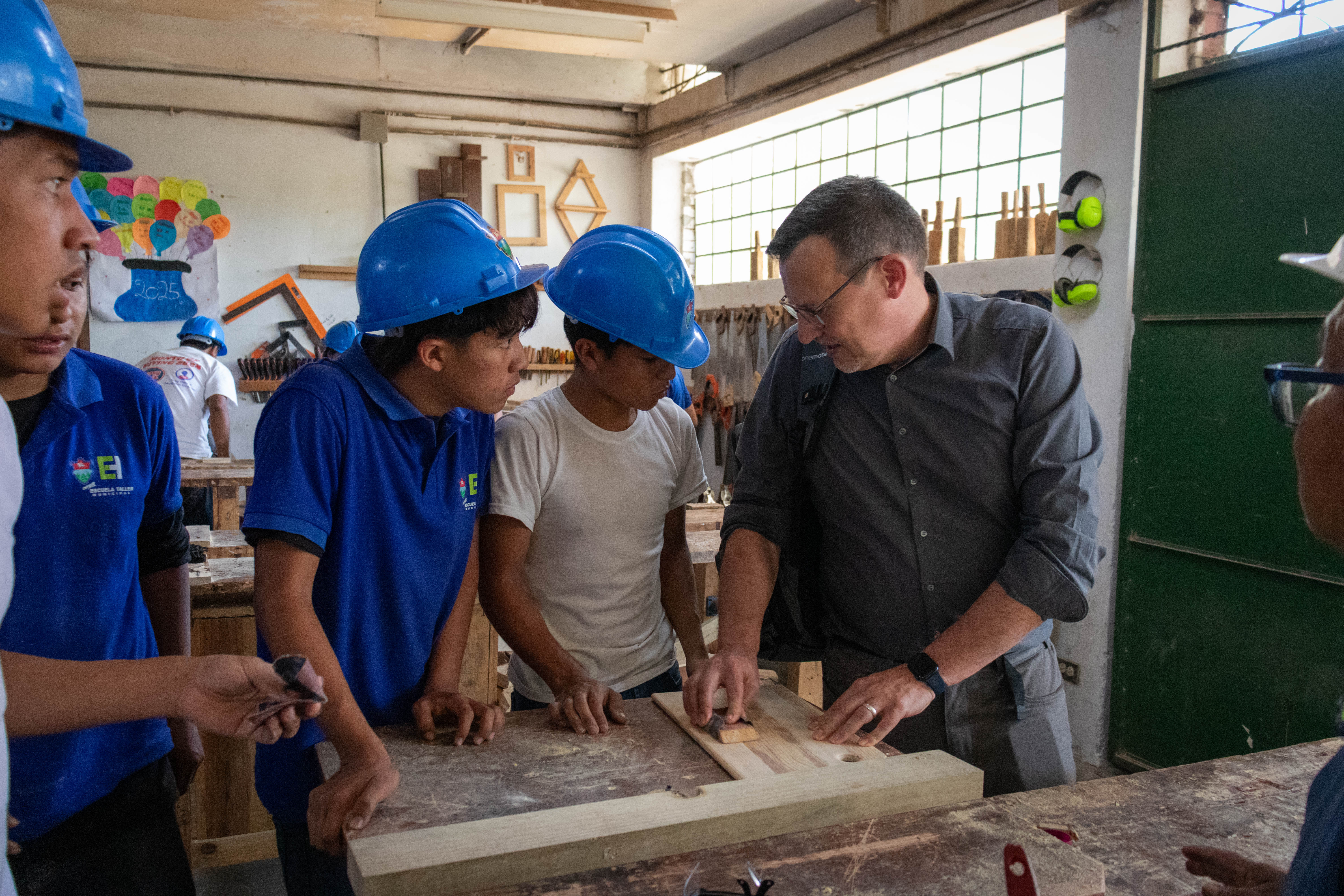
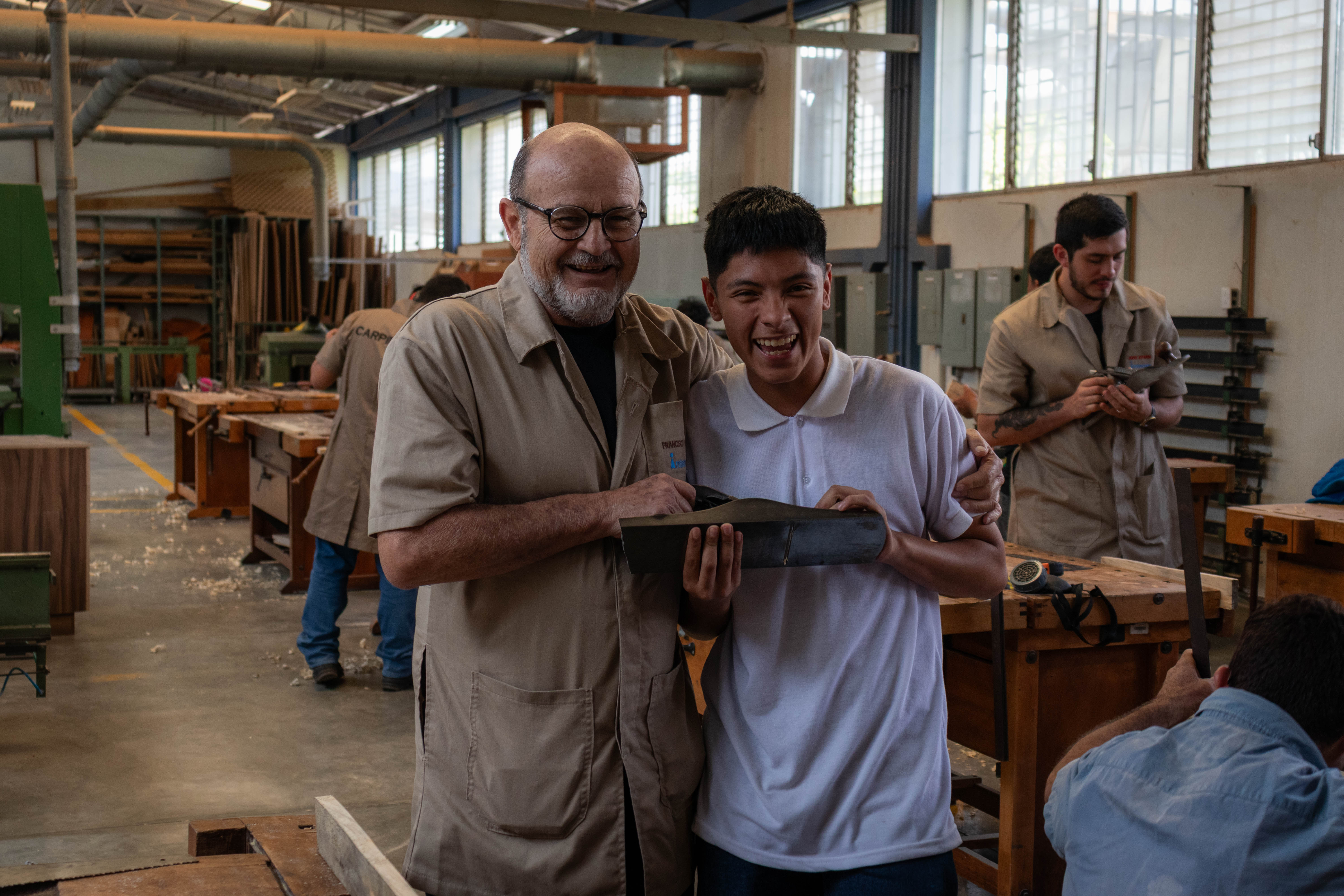

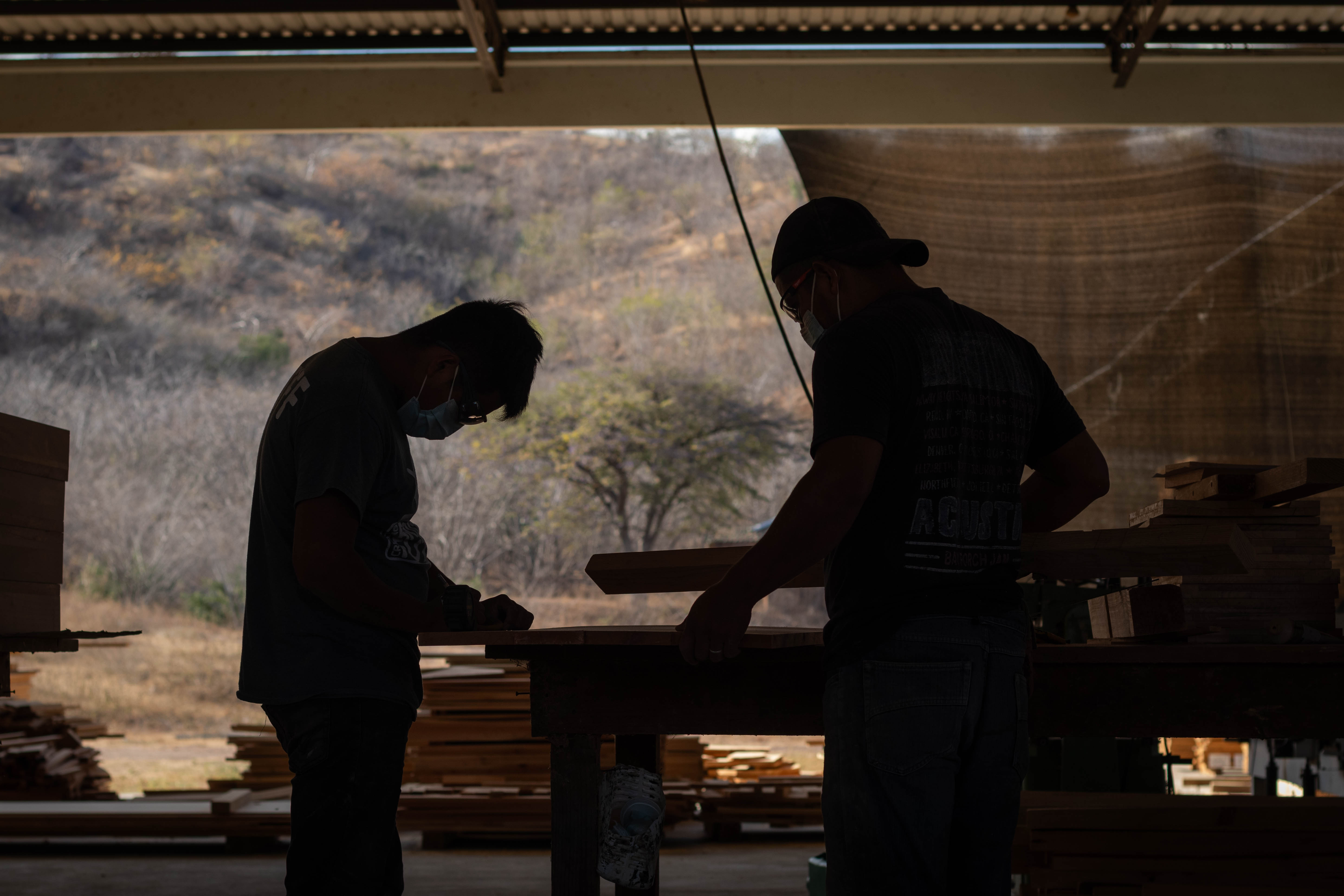
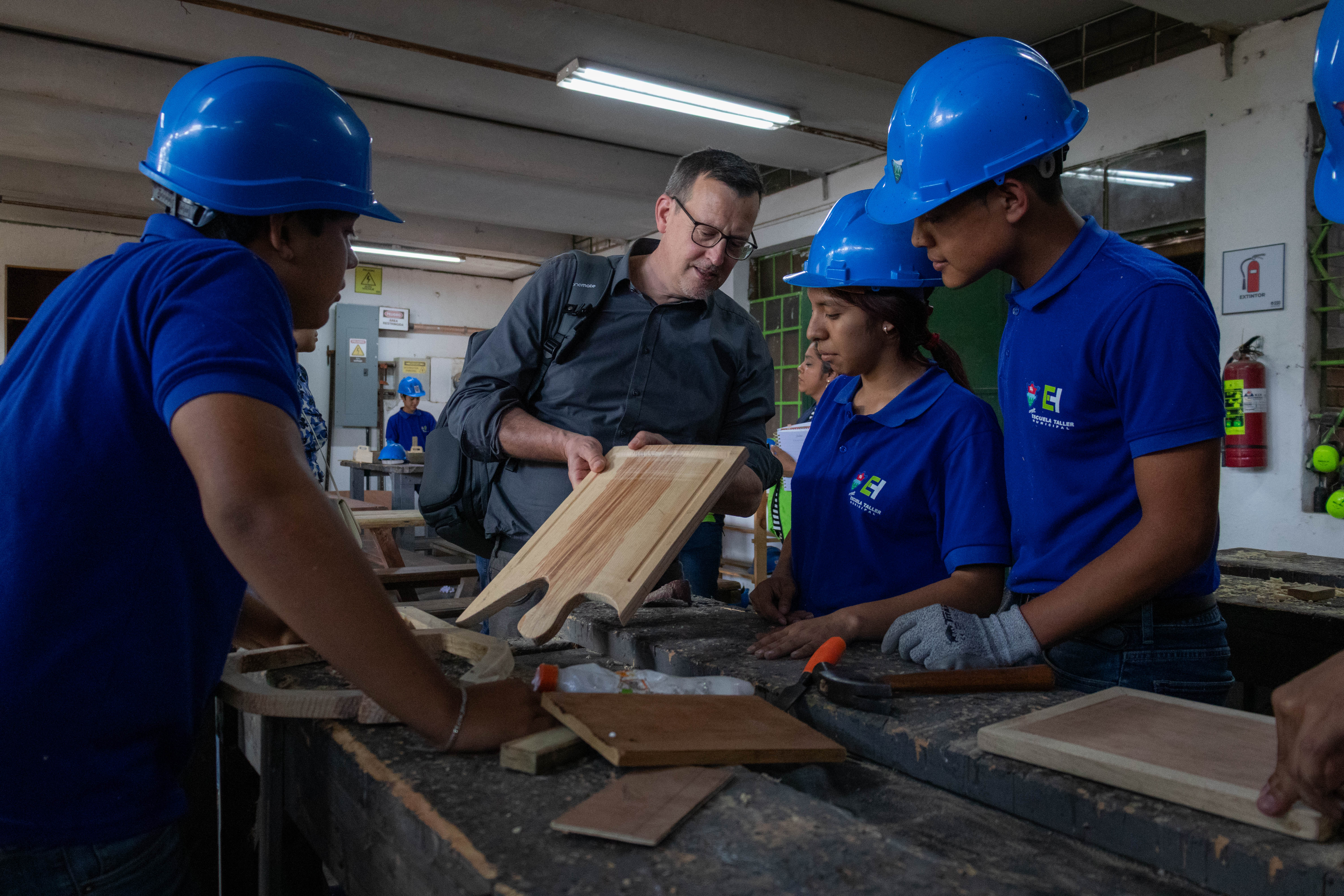
The timber and furniture sector plays a key role in Guatemala’s export economy. At the same time, companies face the challenge of attracting qualified skilled workers for increasingly technised production processes. Together with local partners, approaches have therefore been developed to make vocational training more practice-oriented and to link it more closely to the needs of industry.
One concrete outcome is a bilingual workbook for joinery, which covers topics such as timber technology, design, the use of machinery, health and safety, and workplace organisation. In addition, seven safety posters on the use of machinery and tools have been translated into Spanish. The materials are intended to help impart technical knowledge systematically and to promote uniform safety standards in training companies and workshops.
Another key focus was on the training of in-company trainers. To this end, a programme was developed that combines modern methods of adult education, the assessment of vocational competences and the planning of learning processes. The methodological framework and training materials have been prepared; the programme is scheduled to take place in the fourth quarter of 2026 in collaboration with the Guatemalan vocational training institute IN-TECAP.
Representatives from Guatemalan companies and educational institutions were able to see how dual vocational training works in practice during a study visit to Germany in September 2026.
Visits to companies, vocational training centres and other organisations in the timber and furniture sector provided insights into various training models – ranging from traditional woodworking to industrial manufacturing. The exchange focused on cooperation between companies and educational institutions, as well as the role of in-company and inter-company training in the development of vocational skills.
The results achieved so far lay the foundations for strengthening vocational training in Guatemala’s timber and furniture sector in the long term, as well as ensuring greater competitiveness and employability in both local and international markets. It will now be crucial to make widespread use of the materials, systematically train trainers and further expand cooperation between businesses and educational institutions. This will ensure that training is more closely aligned with actual skills requirements and that the sector’s competitiveness is supported in the long term.