The aim, which BiWe is pursuing in collaboration with the Institut Supérieur d’Enseignement Professionnel (ISEP) ‘Amadou Trawaré’ and the Centre Sectoriel de Formation Professionnelle aux Métiers de la Mécanique et des Engins Motorisés (CSFP MEM) in Diamniadio, is to ensure that training in the fields of truck assembly, commercial vehicle maintenance and inspection is consistently tailored to the needs of the economy.
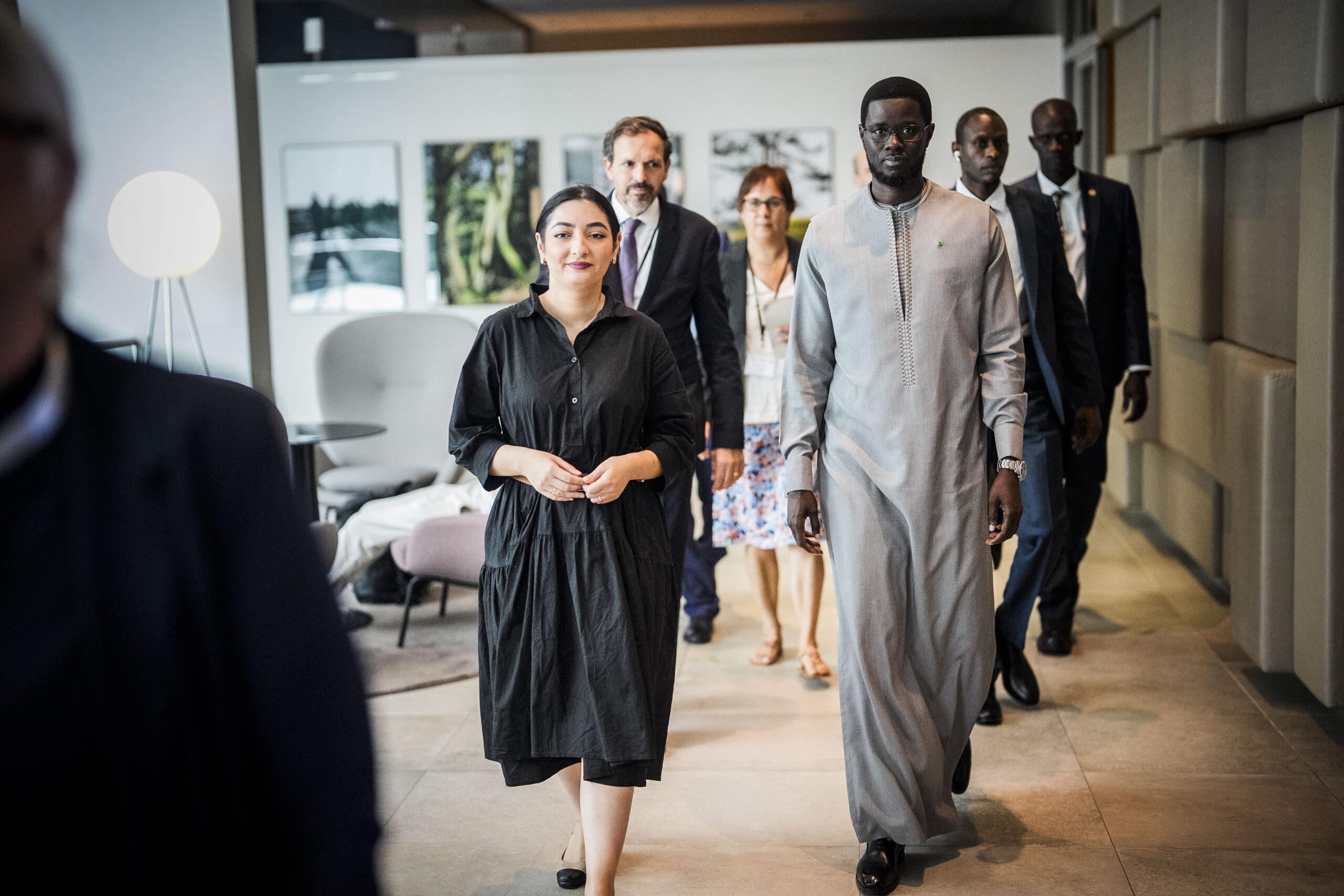
The partnership starts at a time of growing economic ties between Germany and Senegal. At the German-Senegalese Business Day in Berlin in June 2026, companies from both countries met with Senegal’s President Bassirou Diomaye Faye and Germany’s Federal Minister for Economic Cooperation and Development, Reem Alabali Radovan, and several business agreements were concluded. Alongside investment and support for SMEs, vocational training and job creation are among the priorities of the cooperation. Diamniadio shows how concrete this agenda is becoming: in its special economic zone, Daimler Truck is setting up truck assembly together with Global Truck Systems (GTS) and the Senegalese state, driving demand for skilled workers in assembly, maintenance and service.
This is where the BBP comes in. Although vocational training is a high political priority in Senegal, many graduates’ skills do not yet match labour market requirements. Youth unemployment is high, and many people in the vehicle sector work in small, largely informal workshops without formal vocational qualifications. Modern technologies such as diagnostic systems, hybrid drives and electric mobility are still barely reflected in curricula.
Together with the partners, four training programmes will be developed or updated and submitted for accreditation within the Senegalese qualifications framework. Trainers at training centres and in companies will receive further training, practice-oriented learning materials will be produced, including digital formats such as online platforms and augmented reality solutions, and the new programmes will be piloted with around 200 trainees. Particular attention is paid to attracting more women into technical occupations.
Active involvement of the private sector is a key element: companies such as Daimler Truck/GTS and La Sénégalaise de l’Automobile (LASA) provide training places, support the in-company training components and contribute their expertise to the curricula. Both partner centres are well placed for this: ISEP already cooperates with around 150 companies, while CSFP MEM is managed by the private sector as a “Centre à Gestion Déléguée” and has seven well-equipped workshops.
The BBP is implemented under Partners in Transformation and funded by the German Federal Ministry for Economic Cooperation and Development (BMZ). sequa manages the programme on behalf of the BMZ and supports BiWe and its Senegalese partners technically and administratively from planning through implementation, including results orientation, monitoring and networking with other partnership projects.